
From Turing to Today: How Artificial Intelligence Is Transforming Health Care
YL
The start of AI goes back as early as 1935, when Alan Turing created an abstract computing machine better known as the Turing Machine. Turing had envisioned a computer that could learn from its own experience, much like how artificial intelligence in the modern form self-learns. In the 1950s, John McCarthy coined the term “artificial intelligence” and developed LISP, a computer coding language that became a key factor for AI research.

The 21st century’s frontier GPUs and the internet’s vast data led to a turning point in the history of artificial intelligence. In 2016, Google Deepmind’s AlphaGo created a significant historical moment. AlphaGo is an artificial intelligence program that was designed to compete in Go, a two-player abstract strategy game like Chess; it defeated world champion Lee Sedol. It became a pivotal moment in history when it proved that artificial intelligence was no longer a mere rigid calculator, but a tool capable of genuine intuition and strategy.
There are different ways to categorize types of artificial intelligence: functionality/architecture, scope, and capability. Functionality is divided by three underlying technologies: machine learning, deep learning, and generative artificial intelligence. Through machine learning, algorithms learn patterns from data and have no explicit rules. Deep learning is a more advanced subset of machine learning. It uses neural networks, a design inspired by the human brain. Generative artificial intelligence is a branch of deep learning, and it creates new content, such as text, images, music, and code. It is trained on large datasets. In scope, which is based on the breadth of tasks they can handle, there is artificial narrow intelligence (ANI), which is an AI that cannot apply its intelligence outside what it is programmed to perform, meaning it can only perform a highly specific task. Its status is fully realized. There is artificial general intelligence (AGI), which has the ability to learn, think, understand, and apply intelligence where task subjects are limitless. Its status is in development and the current goal of most top companies. Lastly, there is the artificial superintelligence (ASI), which surpasses human intelligence across all fields, including scientific creativity, general wisdom, and social skills. Its status is theoretical.

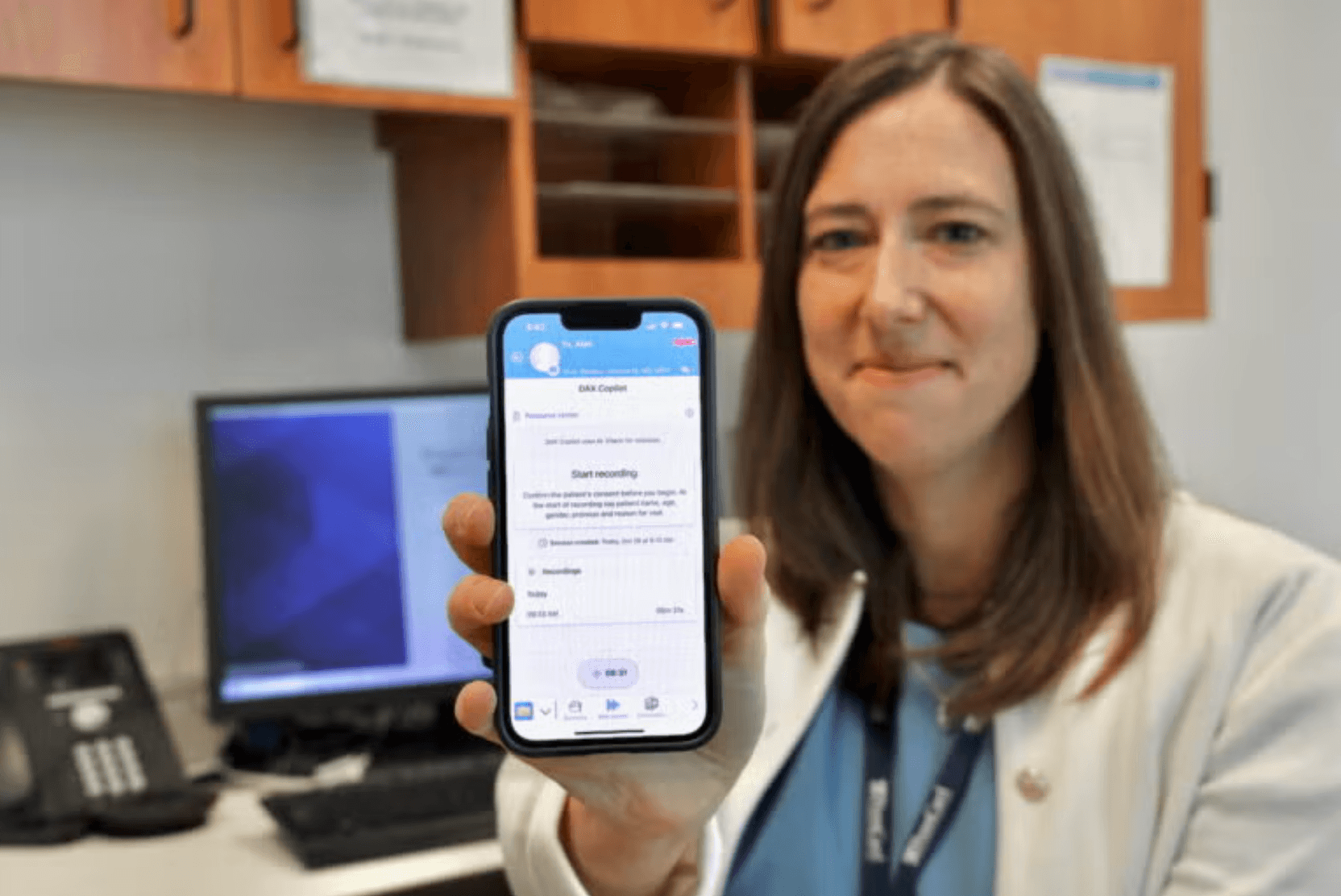
Artificial intelligence is being used in health care in many ways. First, it lessens doctors’ burnouts by reducing the time needed to be spent typing notes into Electronic Health Records (EHR) systems. Additionally, Ambient AI scribes meetings between doctors and patients, which had led to a report of drop in 31% in burnout. Artificial intelligence also smooths operations by flagging billing or document errors before claims are submitted. Second, AI is adept at spotting micro patterns in massive visual datasets that are hard to spot with a naked eye. Specifically, they flag and spot early-stage tumors, microscopic fractures, and other anomalies in medical imaging. Its capacity to do so is especially helpful in specialties such as radiology and oncology. Consumer wearables such as smart watches and patches use AI to monitor biometrics, like heart rhythms and blood glucose. From there, it can detect anomalies such as atrial fibrillation and sudden drops in blood oxygen. Third, it serves as a useful tool for predictive analytics. As part of risk prediction, it can synthesize a patient’s profile through their gene makeup, lifestyle data, and family history to search for early signals of health conditions before they appear. Also, it is able to continuously check ICU patient vitals, anticipate sepsis and sudden cardiac arrest to trigger interventions early before there is a medical concern. Lastly, drug developments can be assisted through AI. Agentic AIs can analyze genomics and clinical outcomes data to create new molecular structures. It can simulate how compounds will behave, bind, and interact for drug efficacy and potential toxic side effects. Ultimately, artificial intelligence is widely used in health care to compress time and maximize convenience.
Xcellent Life uses AI to spot early warning signs long before symptoms show up. By pulling real-time data from wearables, the AI maps a unique health baseline for users. It tracks how variables like sleep and heart rate interact, flagging subtle shifts to predict oncoming risks. Next, an AI coach delivers hyper-personalized lifestyle tweaks, rewarding users with cash incentives for hitting wellness goals. Ultimately, it acts as a tool to lower medical costs and preserve one’s well-being.
Sources:
https://www.britannica.com/science/history-of-artificial-intelligence#ref379822
https://en.wikipedia.org/wiki/AlphaGo
https://en.wikipedia.org/wiki/Turing_machine
https://www.geekwire.com/2025/what-is-an-ai-superfactory-microsoft-unveils-new-approach-to-building-and-linking-datacenters/
https://whyy.org/articles/artificial-intelligence-doctors-patient-visits/
https://pmc.ncbi.nlm.nih.gov/articles/PMC12860439/#:~:text=As%20we%20head%20into%202026,experiments%20into%20core%20healthcare%20systems.
https://www.capgemini.com/insights/expert-perspectives/trends-in-2026-for-healthcare-how-is-ai-making-insight-driven-patient-care-a-reality/?_gl=1*cac61r*_ga*MTc2NzUwMjE1NS4xNzU5ODEwNDE0*_ga_WC57KJ50ZZ*czE3ODE3NDA4OTckbzU1MyRnMSR0MTc4MTc0MzU4NiRqNDEkbDAkaDA.#:~:text=A%20prevention%E2%80%91first%20operating%20model,but%20a%20system%E2%80%91sustainability%20strategy.
https://www.soapnoteai.com/soap-note-guides-and-example/healthcare-ai-trends-2026/
https://mofotech.mofo.com/topics/ai-trends-for-2026---how-ai-is-rewiring-clinical-workflows-and-medical-devices#:~:text=Reinventing%20Clinical%20Documentation%3A%20Generative%20AI,while%20raising%20new%20governance%20considerations.
https://blog.eif.am/generative-ai-in-healthcare-use-cases/#:~:text=Diagnostic%20support%20is%20a%20second,specialist%20radiologists%20in%20controlled%20conditions.
https://mofotech.mofo.com/topics/ai-trends-for-2026---how-ai-is-rewiring-clinical-workflows-and-medical-devices#:~:text=Point%2Dof%2DCare%20and%20Wearable,tools%20and%20FDA%2Dregulated%20devices.
https://www.bcg.com/publications/2026/how-ai-agents-will-transform-health-care#:~:text=AI%2Dsupported%20precision%20medicine%20tailored,example%2C%20years%20before%20symptoms%20appear.
https://xcellentlife.com/home#:~:text=Integrated%20Health%20Monitoring,health%20monitoring%20for%20greater%20outcomes.
https://xcellentlife.com/solutions#:~:text=We%20provide%20a%20comprehensive%20wellness,Get%20Started
https://startupintros.com/orgs/xcellent-life#:~:text=Trends%20like%20multimodal%20data%20integration,preempt%20risks%20and%20elevate%20lives
Link to Xcellent Platform: https://www.xcellentagent.ai/